Product Overview
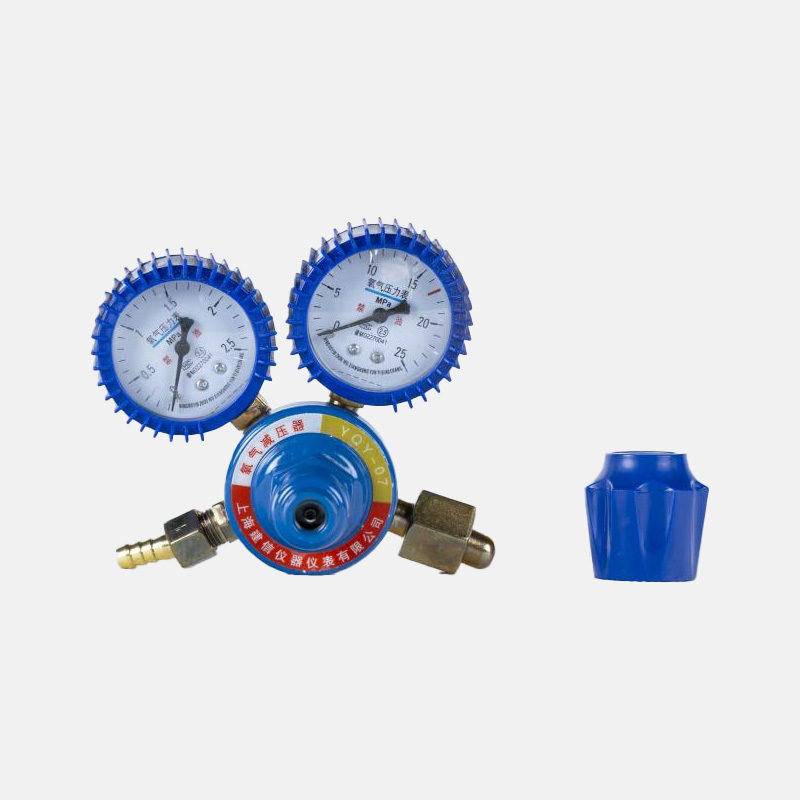
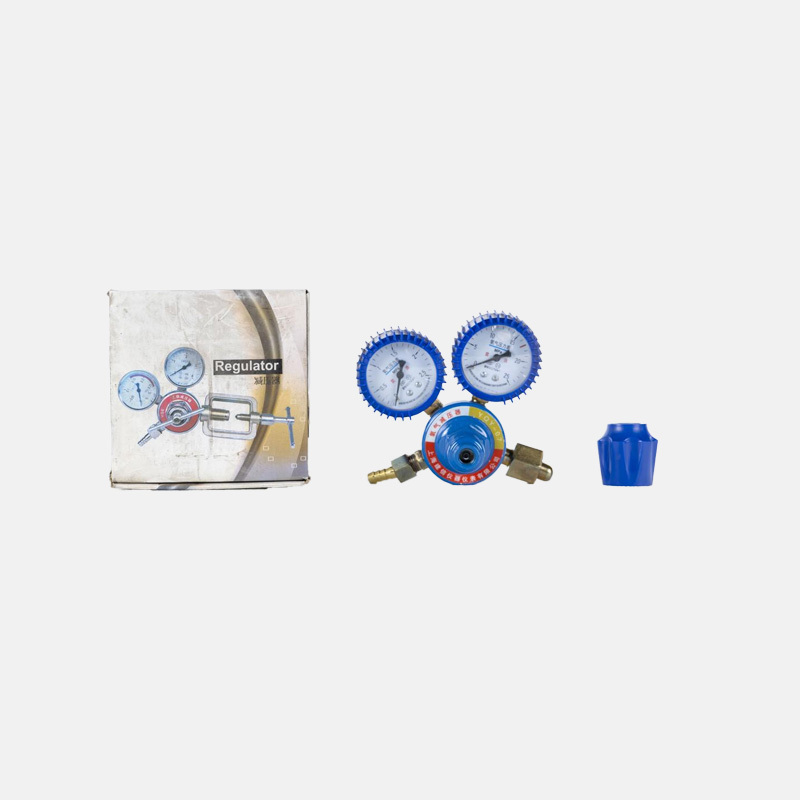
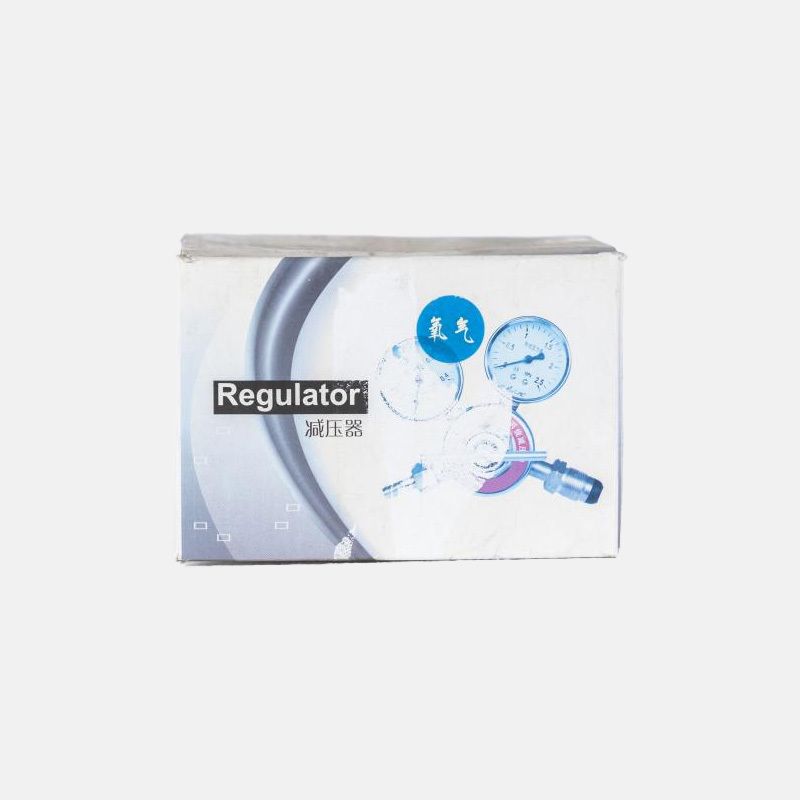
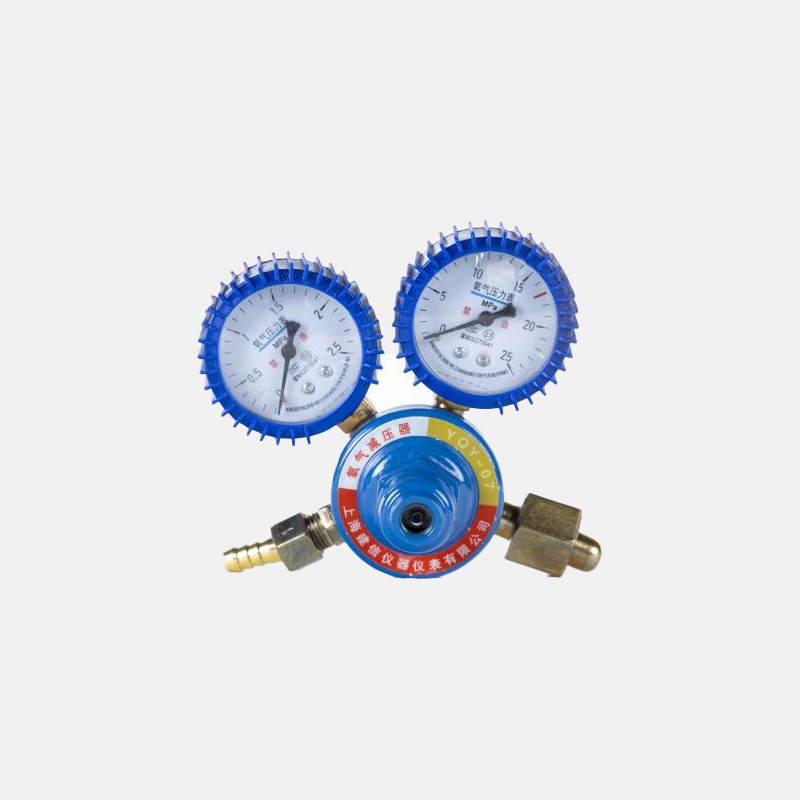
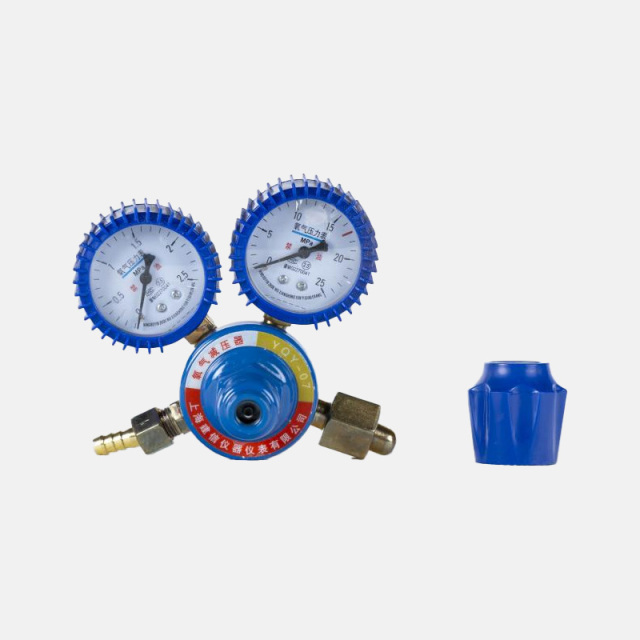
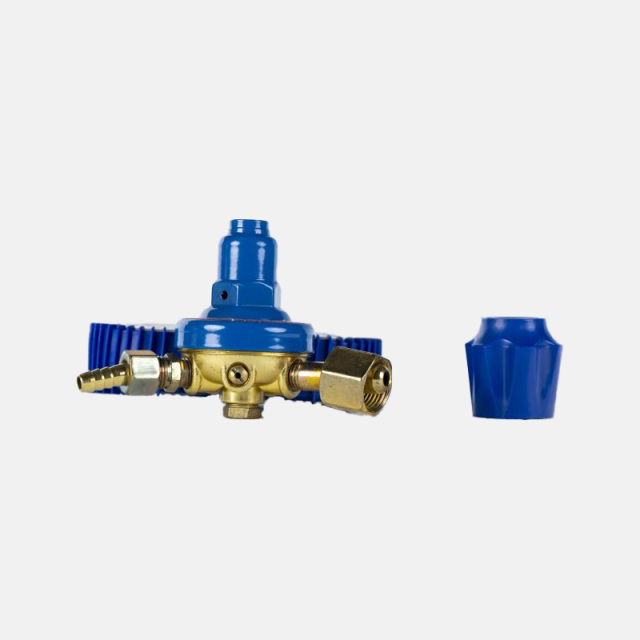
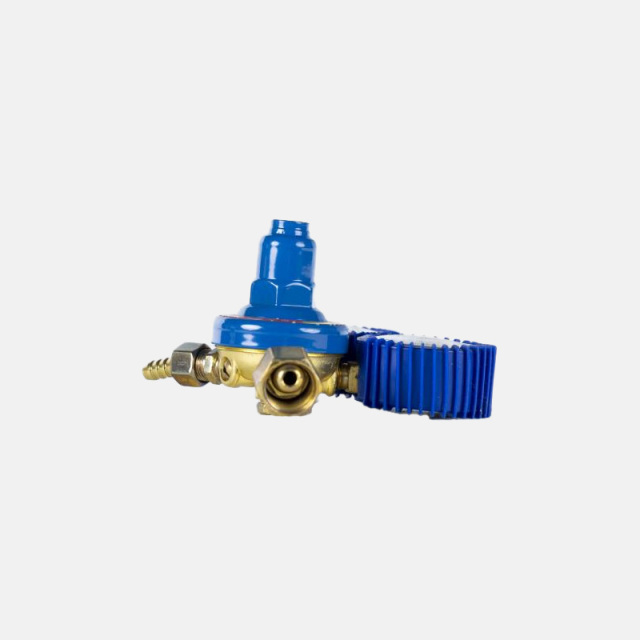
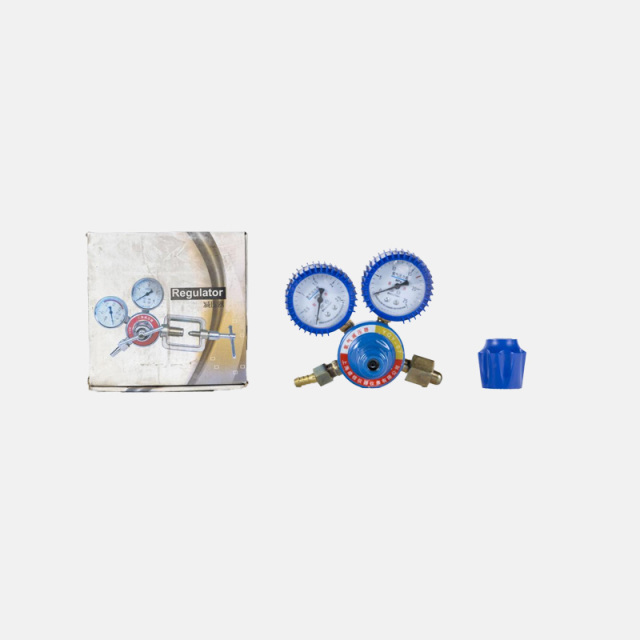
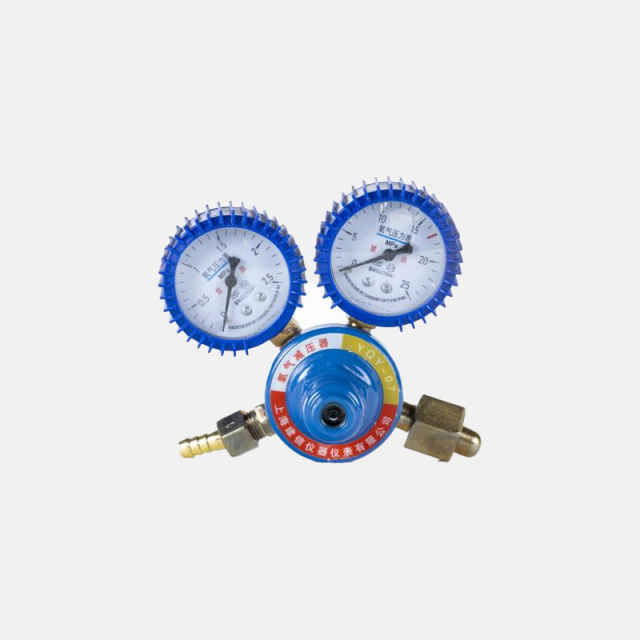
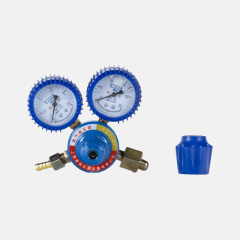
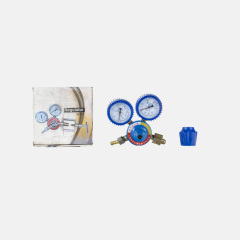
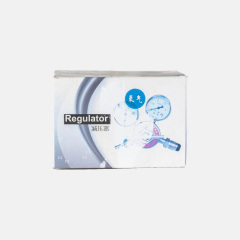
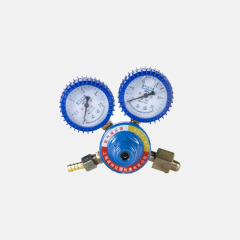
YQY-07 is a cylinder-mounted oxygen pressure reducer: it takes the compressed oxygen in a cylinder down to a working pressure the operator sets by hand, and holds that pressure while the torch is cutting or welding. One adjusting screw gives stepless control from shut-off up to the rated outlet, and the shockproof build is there for the way these units actually live — on the cylinder, moved between benches, knocked against the trolley, left in place for months at a time.
The oxygen side of a set does most of the work, which is why buyers want a dedicated oxygen pressure regulator for welding and cutting rather than a general-purpose unit. Oxygen feeds the preheat flame and then the cutting jet itself, so the reducer has to hold its setting while the operator works the lever dozens of times an hour, and it has to keep holding it as the cylinder empties and the inlet pressure falls.
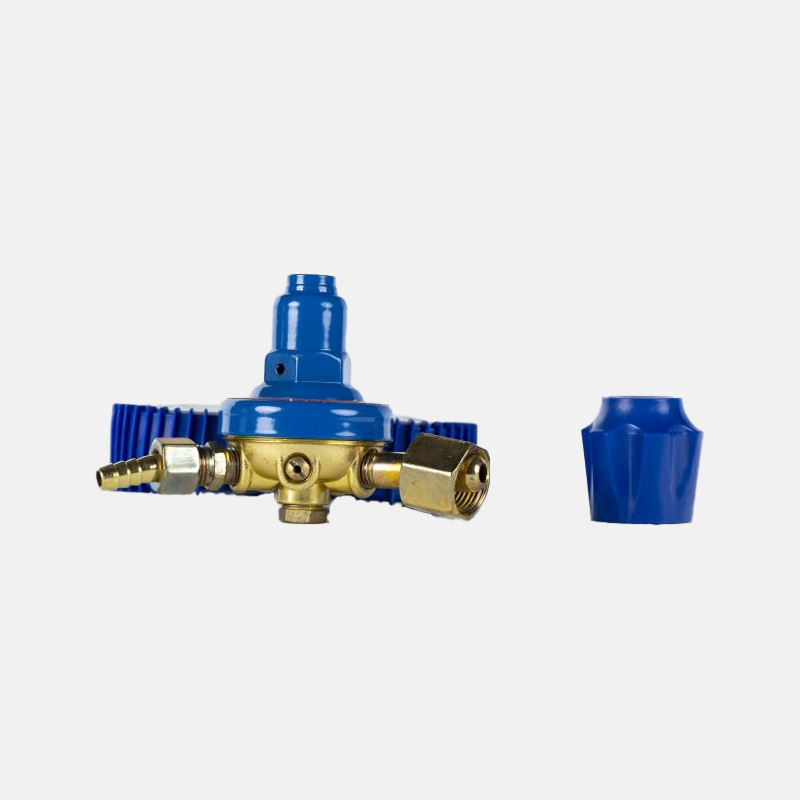
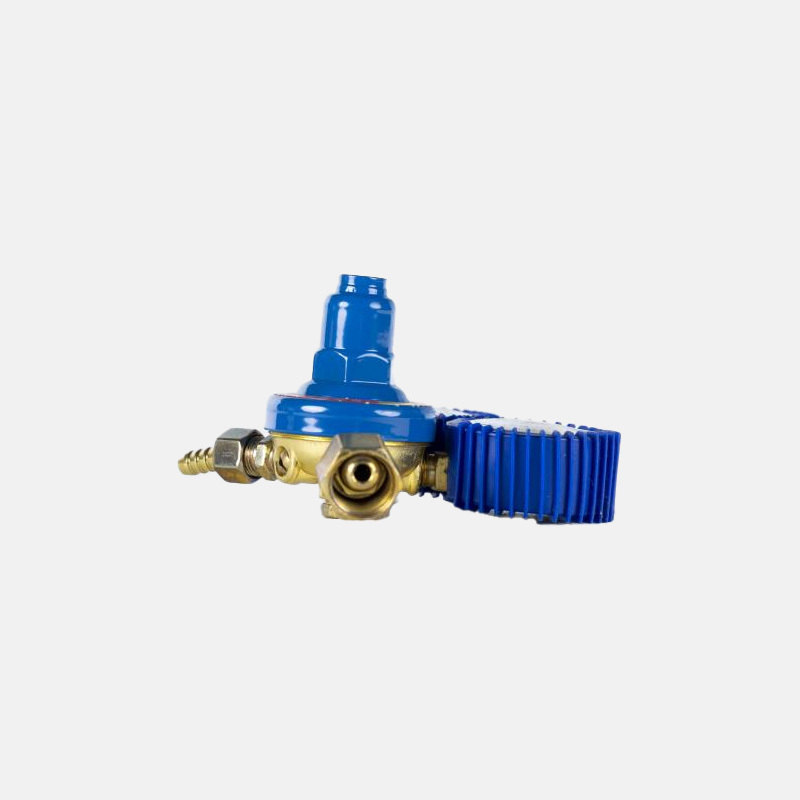
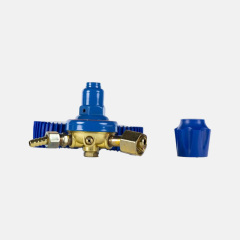
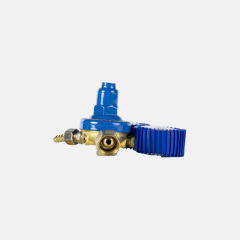
It mounts on the cylinder valve and feeds the torch through the outlet, with the working pressure set and read at the unit rather than at the torch. Fabrication shops and cutting benches buy it as a working part rather than a spare, because a regulator that drifts costs more in wasted gas and spoiled cuts than it saves.
- Shockproof build for a cylinder-mounted life — these units stay on the cylinder, travel between benches on a trolley and take the occasional knock; the assembly is built for that treatment, so the setting does not wander after a bump against the bench. - A steady outlet while the inlet falls — cylinder pressure drops all shift and demand changes every time the lever is pulled. Holding the delivered pressure through both is the core job of an oxygen pressure regulator, and it is what keeps the flame where it was set. - Flame set once, cut after cut — because the delivered pressure does not creep, the operator sets the flame at the start of the job; ignition is quicker and thin work is less likely to be pierced by a flame that has crept up between cuts. - Fine control at the adjusting screw — the outlet comes up gradually instead of jumping past the setting, which matters on thin plate and on preheat settings where a small change shows immediately in the flame. - One range for the whole job — from a soft preheat flame to a full cutting jet on the same torch, so a bench does not need a second regulator to cover both settings.
High-Flow Oxygen Supply
Cutting draws oxygen in a way welding does not. The preheat flame is a small, steady draw; the cutting jet is a short, heavy one that starts and stops every time the operator works the lever. A high-flow oxygen pressure regulator for welding and cutting has to keep up with that pattern, because if the volume is not there the jet sags a second into the cut, the kerf goes ragged at the bottom, and the operator pushes the pressure up to compensate, which only makes the sag worse. That is what the flow rating is doing on this model. Neither figure is decoration: on thick sections the cut takes longer and the jet has to hold for the whole of it. Long hose runs and a second torch downstream take a share of that headroom — worth remembering when a bench grows from one torch to two.
Gas Service Compatibility
- One gas per reducer — YQY-07 is an oxygen pressure regulator and nothing else. The parts that see the gas are assembled clean for oxygen service, and the outlet band is set for cutting and welding work. Running acetylene or argon through it is an unsafe substitution, not a shortcut.
- The thread will not tell you the gas — the oxygen, fuel-gas and argon units in this range all use the same G5/8" cylinder connection, so a fuel-gas reducer will physically screw onto an oxygen cylinder valve. Match the unit to the gas marked on the cylinder, never to whether the nut happens to fit.
- Fuel gas works in a completely different pressure band — the acetylene reducer YQE-03 regulates a 1.6 MPa inlet down to 0.15 MPa at 5 m³/h. An oxygen unit rated to 1.25 MPa outlet would deliver several times the pressure an acetylene torch and hose are built for.
- Argon is low pressure, low flow — the argon reducer YQAr-731L shares the 15 MPa inlet with this unit but delivers at 0.15 MPa across a 0–25 m³/h range, sized for shielding gas on TIG work rather than a cutting jet.
- A welding or cutting set needs two reducers — one on the oxygen cylinder and one on the fuel-gas cylinder, each adjusted independently. A single unit covers only half of the set, which is the most common ordering mistake on these regulators.
- Order the pair together — taking the oxygen and fuel-gas units from the same range lets us check both outlet bands, both cylinder threads and the torch you run before the goods are packed.
- Not sure which unit you need? — send us the gas, the cylinder valve thread and the working pressure your torch or process runs at, and we will confirm the model against those three points before the order is released.
Installation & Commissioning
- Check the cylinder valve outlet and the unit inlet are clean and dry before anything is connected — grit in the joint is the usual reason a new unit leaks at the inlet.
- Hand-thread the unit onto the cylinder valve first. If it binds, stop and inspect the thread rather than forcing it with a wrench.
- Tighten on the hex flats with a correctly sized wrench; never use the body or the adjusting screw as a lever.
- Open the cylinder valve slowly, standing to one side, and test the inlet joint with an approved leak-test solution.
- Open the torch valve, then bring the outlet up to the working pressure with gas flowing; setting it against a closed torch gives a false reading.
- Check the hose and any flashback arrestor before the first cut, and replace perished hose instead of taping it.
- Note the working pressure that suits the job, so the next operator can go straight back to it.
Applications
| Application | Typical duty |
| Steel fabrication and cutting benches | Continuous torch work, cylinders changed often |
| Heavy plate and structural steel | A sustained cutting jet through thick sections |
| Shipyards and site work | Long hose runs with trolley-mounted cylinders |
| Dismantling and scrap recovery | Stop-start cutting with heavy lever work |
| Chemical and process plants | Cylinder oxygen used as a process feed |
| Medical, health and electronics | Clean cylinder oxygen for process work |
Specifications
| Parameter | Value |
|---|
| Model | YQY-07 |
| Product type | Cylinder-mounted oxygen pressure reducer |
| Gas service | Oxygen service only |
| Rated flow rate | 40 m³/h |
| Rated inlet pressure | 15 MPa |
| Rated outlet pressure | 1.25 MPa |
| Cylinder connection | G5/8" |
| Pressure adjustment | Hand adjusting screw, stepless |
| Mounting | Directly on the cylinder valve |
| Working pressure readout | At the unit |
| Construction | Shockproof |
| Typical industries | Welding and cutting, chemical, medical and health, electronics |
Safe Handling & Maintenance
- No oil, no grease, no oiled rags — nothing on an oxygen pressure regulator is ever lubricated. Keep the inlet, the outlet and the cylinder valve free of hydrocarbon and wipe the unit down with a dry, lint-free cloth.
- Treat it as a regulator, not a valve — close the cylinder valve at the end of the shift, then vent the downstream pressure through the torch before loosening a hose or moving the unit.
- Wind the screw back between jobs — leaving the adjusting spring compressed for weeks is what makes a regulator feel notchy and hard to set later; back it off when the work is finished.
- Store it protected — capped or bagged, off the floor and away from grit. A unit that has been dropped or run over should be checked before it goes back onto a cylinder.
- A rising outlet with the torch closed — if the delivered pressure creeps up when nothing is drawing gas, the seat is not sealing; take the unit out of service rather than winding the setting down to compensate.
- A hiss at the inlet joint — a persistent leak at the cylinder connection usually means a damaged thread or a worn seat; have the joint checked instead of tightening harder or wrapping it.
Ordering & Delivery
- Confirm the gas service you are ordering for — the range also covers fuel-gas and argon reducers, and the model has to match the gas.
- Tell us the working outlet pressure your torch or process runs at. If you are replacing a unit, the setting you used before is a reliable guide.
- Say whether you need the oxygen unit on its own or alongside the fuel-gas and argon reducers from the same range.
- Confirm quantity, packing and marking with your sales contact; mixed orders are consolidated and packed for shipment.
- Confirm current lead time, shipping terms and payment terms with your sales contact before the order is released — they depend on destination and order size. As an oxygen pressure regulator supplier we quote against the specification you give us, not against a catalogue guess.
- Ask your sales contact about sample availability and about any inspection or test documentation you need to travel with the shipment.
Quality Control & Inspection
Quality control is where a sourcing partner earns its keep. Every supplier behind our 3,000+ qualified supplier database is audited before we place an order, checked while goods are in production, and checked again before packing: pre-shipment inspection, product testing and, where the working condition calls for it, application and specialised testing. If you prefer your own inspector or an independent lab, we arrange the visit and hand the report over with the shipment. Anything that fails is held back and replaced before dispatch, so the problem is settled here rather than at your goods-in.
FAQ
Is this regulator for oxygen only?
Yes. It is built for oxygen service: the parts that see the gas are assembled clean, and the outlet band is set for oxygen cutting and welding work. A fuel-gas cylinder should never be run through an oxygen regulator.
Will it cover both welding and cutting duty?
Yes. It is rated for the volume a cutting torch draws and for an outlet band that covers a preheat flame as well as a cutting jet, so the same oxygen pressure regulator for welding and cutting can run a heating flame, a welding torch or a cutting head. Set the outlet to the job in front of you — a preheat flame needs far less than a cutting jet, and running higher than the work needs wastes oxygen and shortens hose life.
What cylinder connection does it use?
The inlet is threaded G5/8", a common oxygen cylinder connection. If your cylinders use a different valve thread, tell us before ordering: as an oxygen pressure regulator supplier we would rather confirm the thread with you than send an adapter that adds a second joint to the line.
What happens to the outlet as the cylinder runs down?
It stays at the setting while the inlet pressure falls, so the flame does not need re-adjusting through the shift. Towards the end of the cylinder the delivered flow drops away and the flame shortens — that is the signal to change the cylinder, not a fault in the reducer.
Do I need a separate regulator for the fuel gas?
Yes. The fuel-gas side works at a much lower outlet pressure and its parts are not oxygen-clean, so it needs a reducer of its own. As an oxygen pressure regulator supplier we carry the acetylene unit in the same range, and buying the pair together means both outlet bands can be checked against the torch you run.